Theia | Earth's Lost Twin? The Cosmic Collision!
The idea that Earth wasn’t always a solitary planet in its orbit – that it once tangoed with another celestial body – is mind-blowing, isn’t it? Here’s the thing: it’s not science fiction. It’s a leading theory about the formation of our moon. This dance partner, often called Theia , is at the heart of one of the most compelling origin stories in planetary science. But why does it even matter to us now? Well, understanding the cosmic collisions of the past can tell us a lot about Earth’s future and the potential for life elsewhere.
The Giant-Impact Hypothesis | Theia Enters the Stage
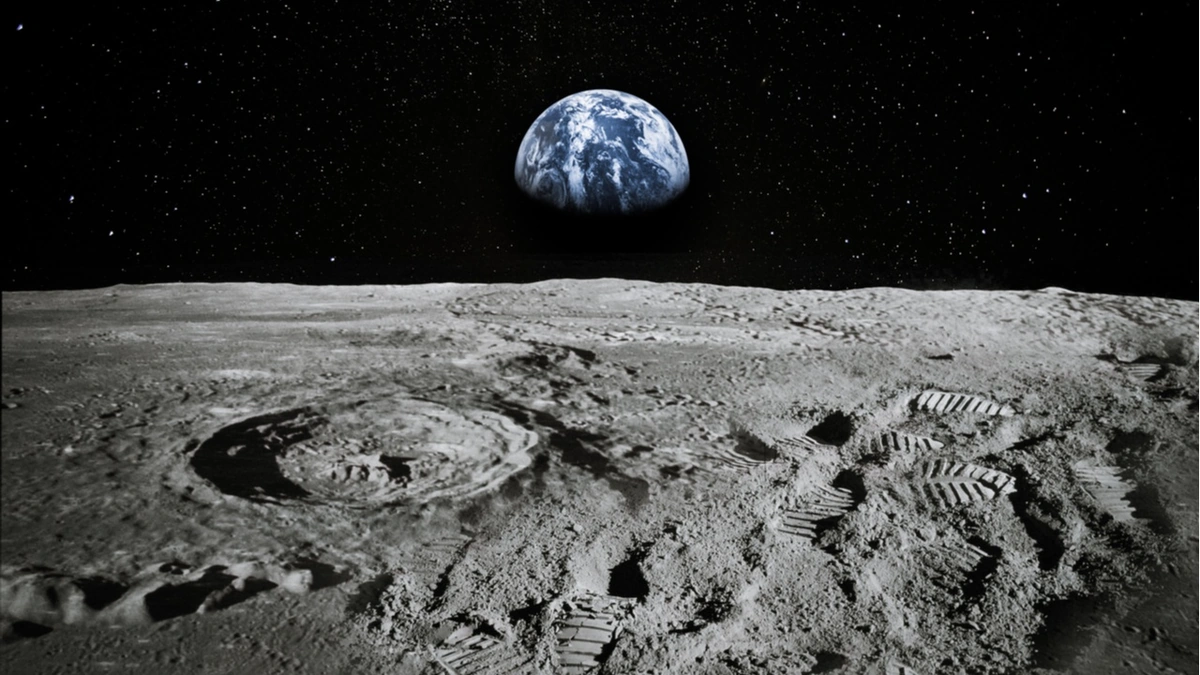
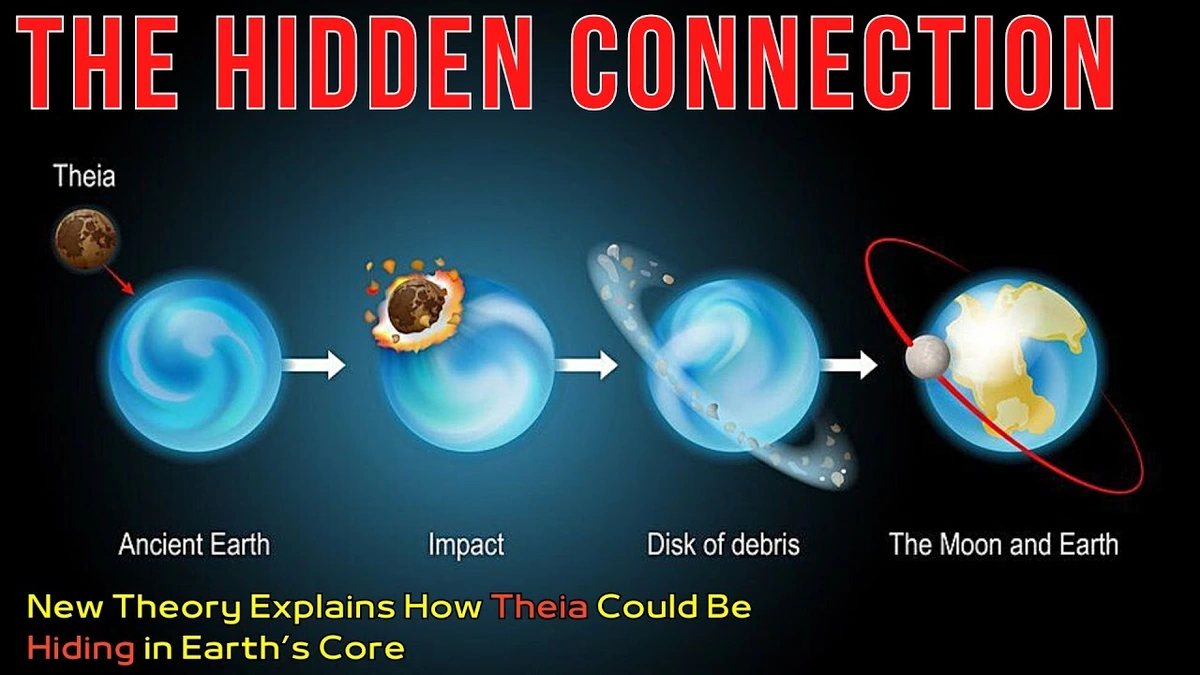
The most widely accepted theory for the moon’s formation is the Giant-Impact Hypothesis. In short, this suggests that early in our solar system’s history, a Mars-sized object – Theia , named after a Titaness in Greek mythology who was the mother of the moon goddess Selene – collided with the early Earth. It was a cataclysmic event, a true planetary smash-up. This isn’t just some minor fender-bender in space; we’re talking about two protoplanets colliding at tremendous speeds. But, let’s be honest, the whole thing sounds like a sci-fi movie.
So, what happened after the impact? The prevailing thought is that the collision ejected a massive amount of debris into space – material from both Earth and Theia . This debris then coalesced under gravity, forming the moon. This explains why the moon is primarily composed of material similar to Earth’s mantle. The earth, forever changed by the impact, continued its journey around the sun.
Why Theia, Why Now? The Unseen Importance
You might be thinking, “Okay, cool story. But why should I care about some ancient planetary collision?” Here’s why: The Giant-Impact Hypothesis is more than just a nice story. It’s critical for understanding Earth’s composition, its spin, and even the possibility of water on our planet! What fascinates me is how intertwined these seemingly disparate cosmic events are. According toThe Planetary Society, understanding the Moon’s formation tells us a lot about the Earth’s history.
Let me rephrase that for clarity… if Theia hadn’t collided with Earth, our planet might be a very different place. The impact likely contributed to Earth’s relatively large core and its rapid rotation. Some theories even suggest that the impact delivered significant amounts of water to Earth. So, in a way, we owe our existence to this ancient collision! And the existence of other planetary bodies throughout the solar system.
Evidence and Ongoing Research | Unraveling the Mystery
But how do scientists know all this? It’s not like they were there to witness the collision. Evidence for the Giant-Impact Hypothesis comes from several sources. Lunar samples brought back by the Apollo missions show that the moon’s composition is remarkably similar to Earth’s mantle. Isotopic analysis reveals that the moon and Earth share a nearly identical isotopic fingerprint, suggesting they formed from the same material. What’s more, computer simulations of planetary collisions support the idea that a Mars-sized object could have created the moon. A common mistake I see people make is to assume that science is static. It is ever changing.
Ongoing research continues to refine our understanding of the Theia impact . Scientists are using increasingly sophisticated computer models to simulate the collision and its aftermath. They’re also analyzing lunar samples with more advanced techniques, searching for subtle differences in composition that could provide clues about Theia’s origin. According to research, such as that done at NASA’s Apollo missions , the samples collected are still valuable to this research.
Theia’s Legacy | A World Transformed
The impact had an undeniable effect. It drastically changed the trajectory of both worlds. Let’s be honest, the Earth we know today is a direct result of this cosmic event. The moon, born from the debris of the collision, stabilizes Earth’s axial tilt, which gives us relatively stable seasons. Without the moon, Earth’s climate would be much more chaotic and unpredictable. And that stable climate is crucial for the development of complex life.
But beyond the scientific implications, there’s a philosophical aspect to consider. The story of Theia reminds us that our planet is not an isolated entity. It’s part of a vast, interconnected cosmos where collisions and interactions shape the destinies of worlds. Theia, the hypothetical planet that collided with Earth, adds richness to the Earth’s story.
Frequently Asked Questions (FAQ)
FAQ Section
What was the size of Theia?
Theia is estimated to have been roughly the size of Mars, which is about a tenth of Earth’s mass.
How long ago did the Theia impact happen?
Scientists believe the impact occurred approximately 4.5 billion years ago, early in the solar system’s history.
Is there any chance of another collision like the Theia impact happening again?
While major collisions are rare now, smaller impacts from asteroids and comets are still possible, though nothing on the scale of the Theia impact .
What would Earth be like without the moon?
Without the moon, Earth’s axial tilt would be unstable, leading to extreme climate fluctuations and potentially hindering the development of complex life. I initially thought this was straightforward, but then I realized how much the moon’s absence would change things.
So, as we look up at the moon, remember that it’s more than just a pretty sight in the night sky. It’s a constant reminder of the violent, chaotic, and ultimately creative forces that shaped our planet. And that collision of Theia gave Earth the moon, an entity that shapes the waves and stabilizes the planet’s tilt . The legacy of Theia lives on, not just in the rocks on the moon, but in the very fabric of our world.
About the Author